
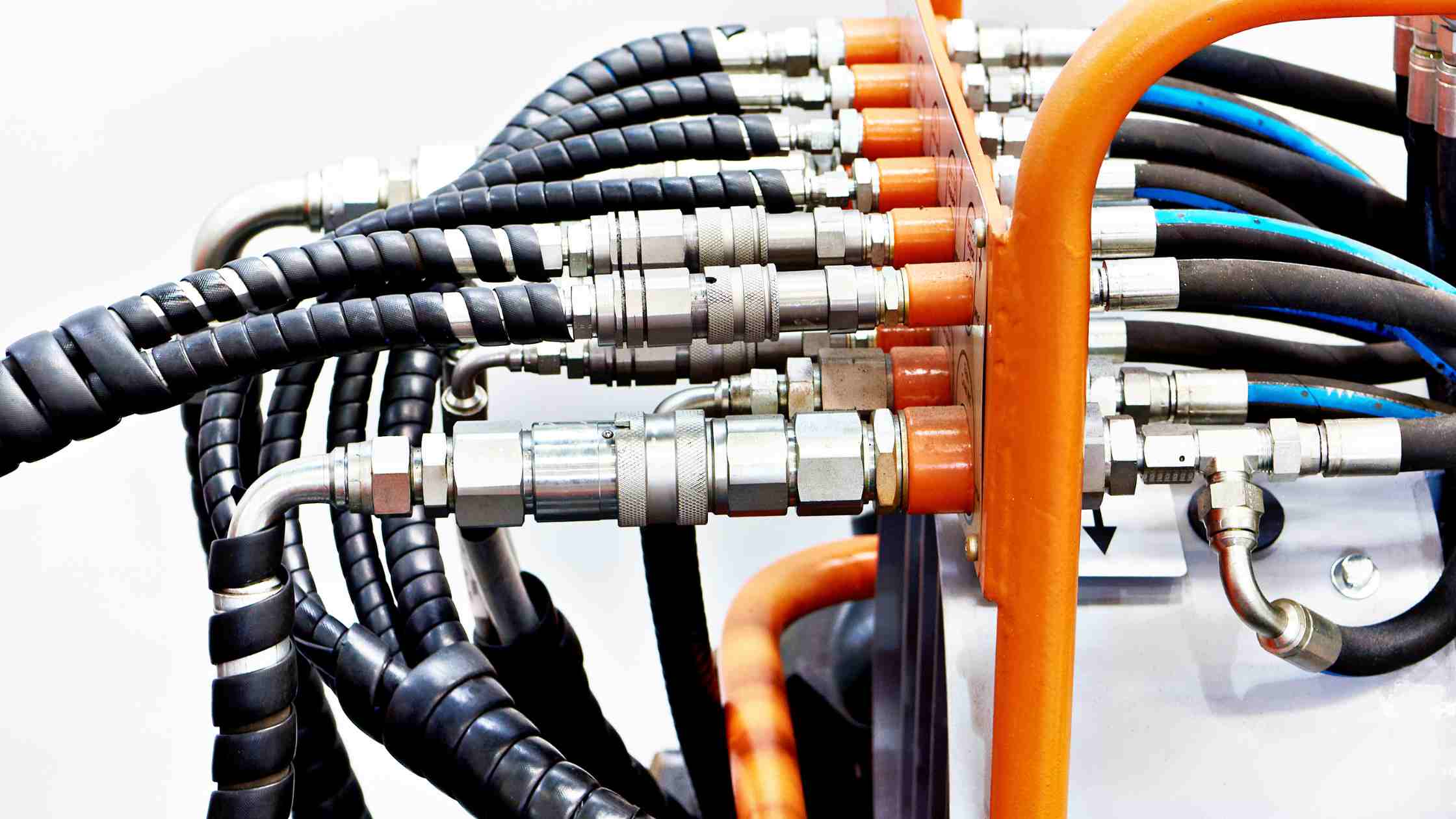
Hydraulic systems should always be initiated under controlled conditions, with clean oil, predictable valve positions, and secure line routing. Skipping essential checks may increase the risk of contaminants circulating around your hydraulic fluid, as well as cavitation and overheating. Fortunately, a structured pre-start procedure prevents most start-up-related damage before it can occur. Read on to find out more.

Step one: confirm oil level and condition before engaging the pump
Check the reservoir and verify that the fluid is still within the recommended fill range. If not, top it up. Next, inspect the fluid for clarity, colour, and odour. Dark, cloudy-looking or metallic-smelling oil could indicate contamination, water ingress or oxidation, which could damage your system. If the contamination is visible to the naked eye, it will already be at a harmful level. For mild to moderate contamination, run an off-line/kidney loop filtration process to clean the fluid, or increase the filter rating (lower micron) if swarf or other metallic debris is present. However, if the fluid has turned acidic, or large metallic particles are found, you may require a full system flush to remove trapped debris from your hoses, valves, cylinders, and pipework.
Step two: check filtration status and differential pressure indicators
Your filters protect the system most during the initial circulation of fluid, where settled debris becomes mobile, so if the filter is already partially blocked, it may bypass or fail to catch the debris; pushing contamination directly into the actuators, pumps, and valves. Check the differential pressure gauges or clog indicators: an elevated reading means that the element is nearing restriction. If the filter is close to its limit or overdue for replacement, we recommend changing it before the first pressurised cycle.
Step three: inspect the hoses, lines, and connections
Visually inspect the system for surface wear, cracking, or blistering along your hose runs, making sure that all hydraulic hose fittings are tight, undamaged, and fully supported to prevent vibrations. Line failure under load is often preceded by small signs, and start-up is your best chance to catch them early.
Step four: verify all valves in their correct start-up position
The relief, flow, and directional valves must return to neutral or their designated safe start position. Incorrect configuration – e.g. a mis-set relief or fully closed Webtec valve – may restrict flow and generate dangerous pressure spikes. This makes valve position one of the most critical pre-start checks.
Step five: bleed air where necessary and stabilise system pressure
Systems that have been idle, serviced, or drained often contain unwanted air pockets. This is a problem because air, like any fluid, compresses under load, potentially causing unstable pressure and cavitation. During warmup, therefore, use diagnostic equipment or manual bleed points to purge the air gradually. Pressure should rise smoothly; any pulsing or ‘sponginess’ suggests that there is still air in the system.
Step six: confirm pump rotation, alignment, and coupling condition
We recommend starting in ‘jog mode’ to verify rotation direction – i.e. that the pump shaft and motor are aligned along the same plane. This allows power to transfer smoothly without side-loading the bearings. When the alignment is correct, the system will build pressure with less friction and less mechanical stress during start-up, improving efficiency. Misalignments or loose couplings, on the other hand, can create excess vibrations and heat, putting the bearings and shafts under strain.
Step seven: apply load gradually
Once circulation begins, it’s important to increase system pressure gradually, in stages. Do not accelerate to full pressure instantly. Instead, allow the fluid viscosity to stabilise, the filters to settle, and heat to distribute evenly. This gradual rise is especially important in systems that use brake cylinders, where sudden pressurisation may cause shock loading or unpredictable movements.
What next?
Please get in touch with one of the experts at HydraStar today to discuss our support and supply services for fluid power systems.

Image Source: Canva