
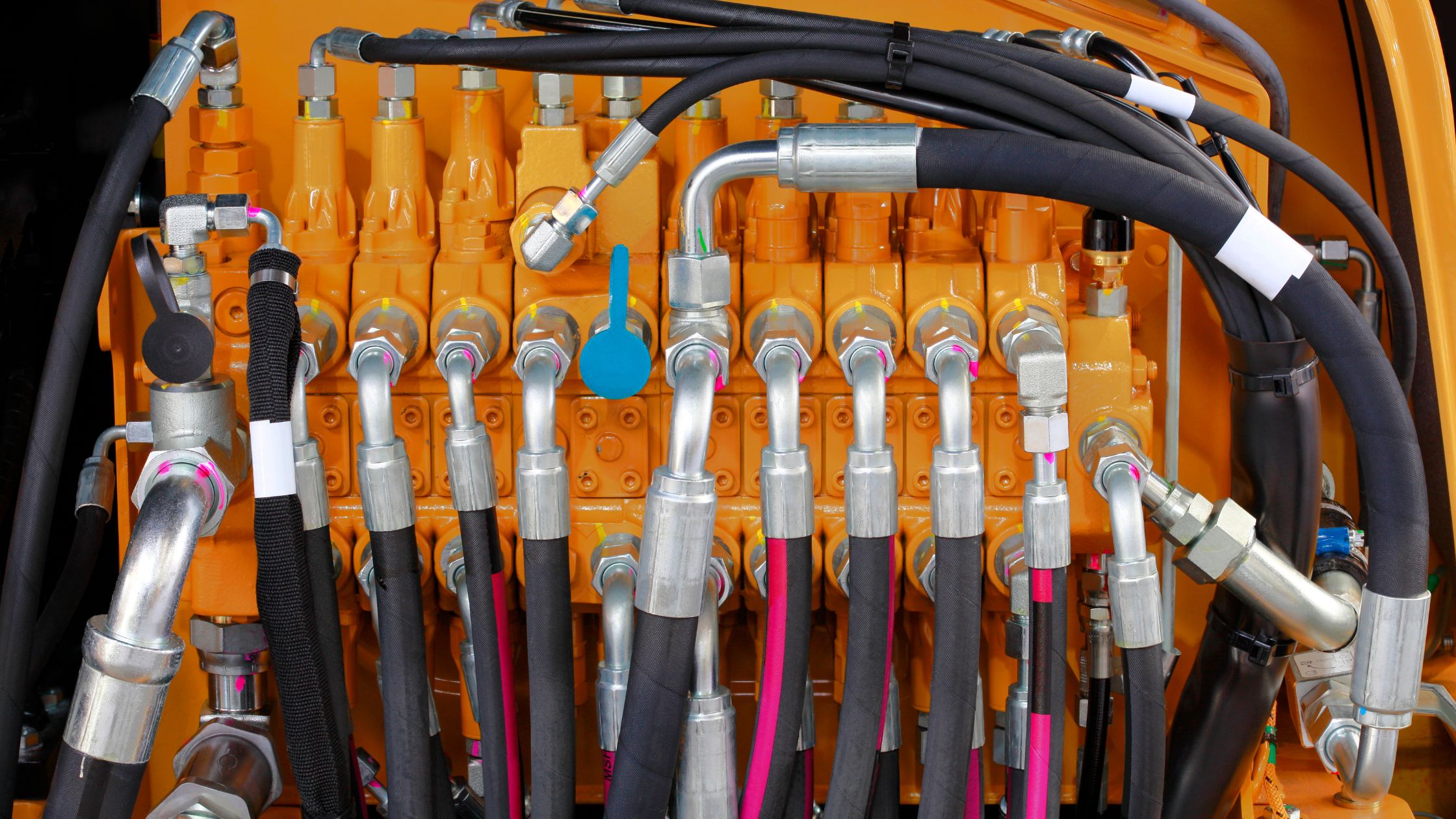
Hydraulic and pneumatic systems power some of the world’s most demanding industrial processes; lifting, clamping, driving, pressing, excavating and positioning with force beyond what mechanical drives alone could deliver. And as the economy strives toward net zero goals, fluid power is more important than ever, with applications being redesigned and reshaped to be leaner, cleaner, and produce more power from the same footprint.

‘Sustainable fluid power engineering’ seeks to maximise the power a system can deliver, but also to do so in the most efficient way, and at the least environmental cost. In this article, we look at how fluid power technology is adapting to meet these aspirations.
1) Energy-responsive control for reduced power consumption
Traditional fluid power systems often ran continuously at fixed pressure, regardless of the load requirements. This gave operators performance headroom, at the expense of consuming energy unnecessarily during idle or partial-duty operations. More efficient systems can now adjust their flow and pressure according to demand. For example, variable speed pump drives are increasingly replacing constant speed motors, and some pneumatic systems have flow optimisation valves to reduce air wastage. Measurement and verification tools, such as digital pressure gauges, also make performance changes more visible to engineers, allowing operators to quantify their energy savings rather than assume them.
2) Cleaner hydraulic fluids for lower environmental risk
Fluid loss and leakage is a significant sustainability concern in hydraulic systems. Even a minor leak of certain fluids can contaminate the surrounding ecosystems and water sources should it escape, as well as increasing wear on the system itself. The industry is responding to this challenge in several ways, including:
- Higher quality lubricants with longer service intervals: engineered oils and synthetics, such as Fuchs lubricants, provide better thermal stability and oxidation resistance, allowing systems to run longer between changes, and generating less waste throughout their life-cycle.
- Non-toxic and biodegradable fluids: these fluids reduce ecological risk in applications where leaks are difficult to contain, minimising environmental harm in construction, offshore, mining, and farming environments.
3) Lightweight components and efficient materials
Reducing component mass is an effective way of lowering the net energy use of mobile platforms, as well as reducing the carbon footprint associated with manufacturing. Recent developments include aluminium manifold blocks and compact cylinder housings, as well as lightweight seals and valve bodies. Efficient routing also plays a role. Modern hydraulic hose fittings with improved flow geometry reduce the pressure drop across the circuit, helping systems deliver the same output using less energy. Even marginal efficiency savings can scale significantly across large fleets, factories, and continuous-duty applications.
4) Regenerative and hybrid power strategies
Regeneration, the process of capturing energy instead of dissipating it, is becoming an important driver of sustainable actuation. In hydraulic applications, this often involves accumulator-based energy recovery, in which the excess force or fluid movement is stored and reused rather than throttled through a relief valve. Pneumatic systems can achieve a similar effect using exhaust air recapture loops that allow compressed air to be recycled rather than vented. Hybrid electric/hydraulic drives are also gaining in popularity, particularly in variable load applications where power demand fluctuates. This allows the system to draw energy only when needed. In heavy plant such as excavators and cranes, regeneration can even be applied to downforce recovery, using the weight of the machine itself to re-pressurise fluid power circuits and feed the stored energy back into the system.
5) Designing for full life-cycle value
Designing fluid power systems for a longer service life is becoming just as important as improving day to day working efficiency, because extending the life of equipment reduces material usage, replacement frequency, and its overall environmental impact. This shift is driving the adoption of more durable seals, for example, as well as higher quality hydraulic hose fittings and advanced surface treatments that resist wear over long duty cycles. Contamination control is another major factor: in-line and off-line filtration systems help to maintain fluid integrity, reducing abrasive damage and slowing down the rate of component fatigue. By prioritising longevity over peak output alone, modern hydraulic power design directly contributes to weight reduction, greater resource efficiency, and a more sustainable industrial life-cycle.
Find out more
Please get in touch with one of the specialists at HydraStar today to find out more about sustainable fluid power, and how you can adapt your applications to meet the needs of the net zero economy.

Image Source: Canva