
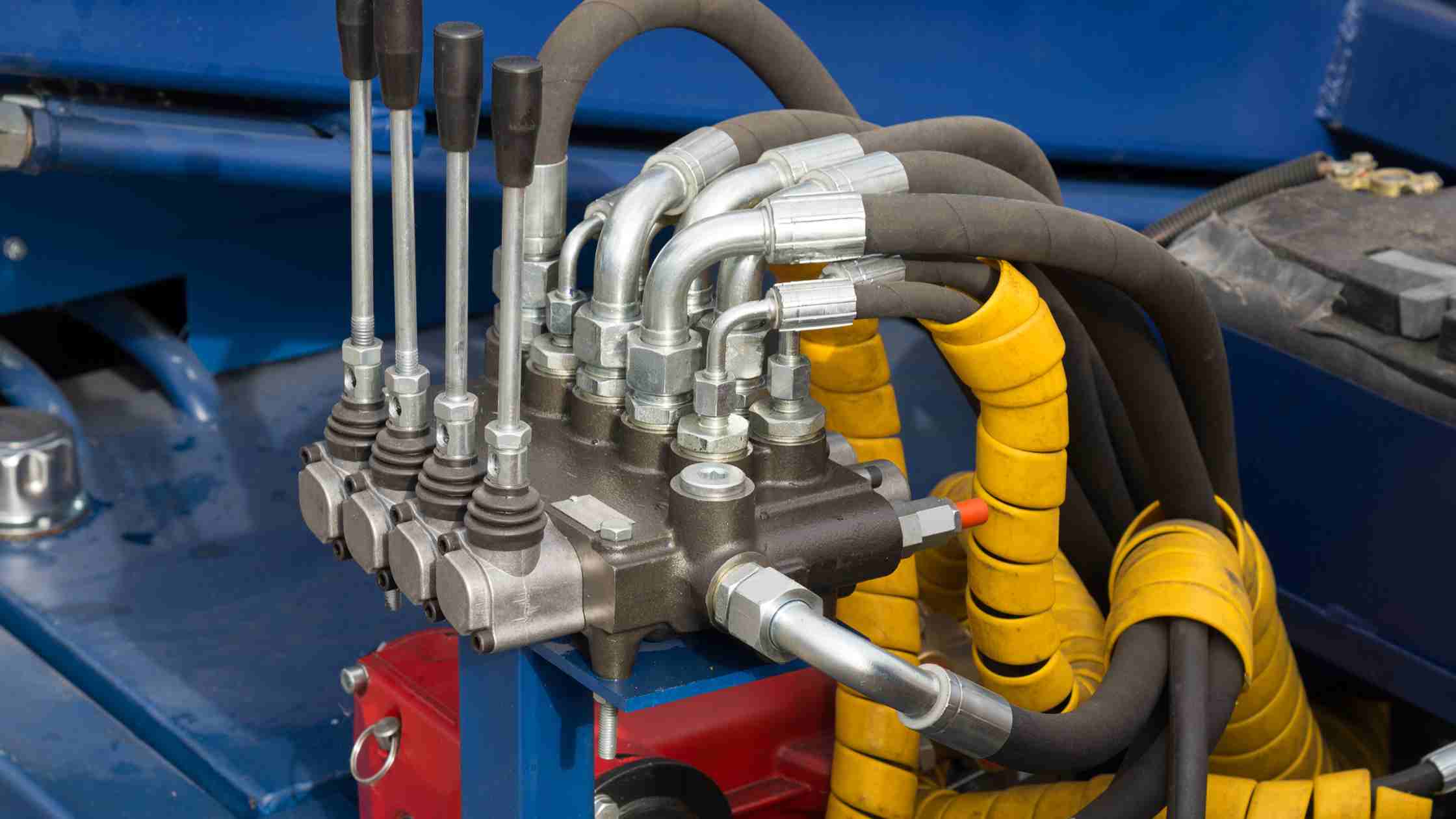
The fluid power sector may be built on pressure, flow, and mechanical strength, but its future is likely to be driven as much by efficiency, data assets, and smarter design. As we move into 2026, we look at three emerging trends that reflect where hydraulic design and applications could be heading. Each one contributes to longer service life, more predictable maintenance cycles, and better energy use in industrial and mobile machinery.

1) Condition monitoring becomes standard practice
Fluid power systems have historically been serviced on a fixed schedule, with faults identified only after performance decline or failure. However, modern condition-monitoring technology is changing this approach. Engineers now have access to a wider range of operational data, allowing emerging issues to be identified at an earlier stage and resolved before they lead to downtime. Condition monitoring generally involves smart sensors installed at strategic points, such as your return lines, filter housings, actuator ports, and pump outlets, where performance anomalies are most indicative of wear.
These sensors track variables such as pressure and flow deviations, thermal loading and oil temperature, duty cycle behaviour under varying load, and even contamination levels within the hydraulic fluid. Using this information, your engineers can detect increased restriction, pump fatigue, or valve damage before any external symptoms appear. When combined with integrated filtration analytics (from market leaders such as MP Filtri), maintenance becomes evidence-based rather than standardised, extending component lives and leading to safer systems. This trend is expected to accelerate throughout 2026 as monitoring hardware becomes more compact, affordable, and widely adopted in OEM system design.
2) More efficient system architecture and component weight reduction
Space and energy consumption are perennial concerns in fixed plant and mobile hydraulic applications, but materials science and design engineering have not always managed keep pace with the performance requirements of manufacturers. Recent advantages have changed this landscape, however. Many manufacturers are now putting out smaller form components, optimising flow paths, and reducing mass without having to compromise strength or pressure rating. For example, some compact valve assemblies, engineered from composites or lightweight alloys, have both a smaller footprint than earlier generation components and higher-pressure capability. Advances in hydraulic fittings and hose technology now allow tighter installation radii, lower permeation rates, and better temperature stability – enabling more efficient circuit designs. Similar improvement in hydraulic cylinder metallurgy and seal compounds are enabling higher duty cycles with less heat loss, and a lower leakage risk. This is a positive direction of travel, with future systems promising to deliver equal or greater performance using less energy and material.
3) Greater automation in testing, commissioning, and verification
Commissioning and troubleshooting have traditionally relied heavily on engineer experience, with performance verified manually through portable gauges or flowmeters. Make no mistake, expertise will play a central role in 2026 as it always has. However, automation technologies are improving consistency, accuracy, and recordability at all stages of the process, supporting engineers to make better diagnoses, and improving warranty traceability. Software-assisted commissioning and performance sign off saves valuable time and money at the implementation stage, with notable effects on safety and performance. Some of the latest testing approaches also involve standardised test point integrated during the system build, and digital data logging that allows extended performance reviews throughout the system’s service life.
The outlook for 2026
The new technologies shaping the fluid power sector are not so much a replacement of what has traditionally worked, but an advance in how these systems perform. It’s an interesting crossroads point for hydraulic design, with fluid systems becoming more predictable, sustainable, and cost efficient. To find out more or to discuss your design specifications with one of our experienced team, please contact HydraStar today by clicking here, or call us directly on 01353 721704.