
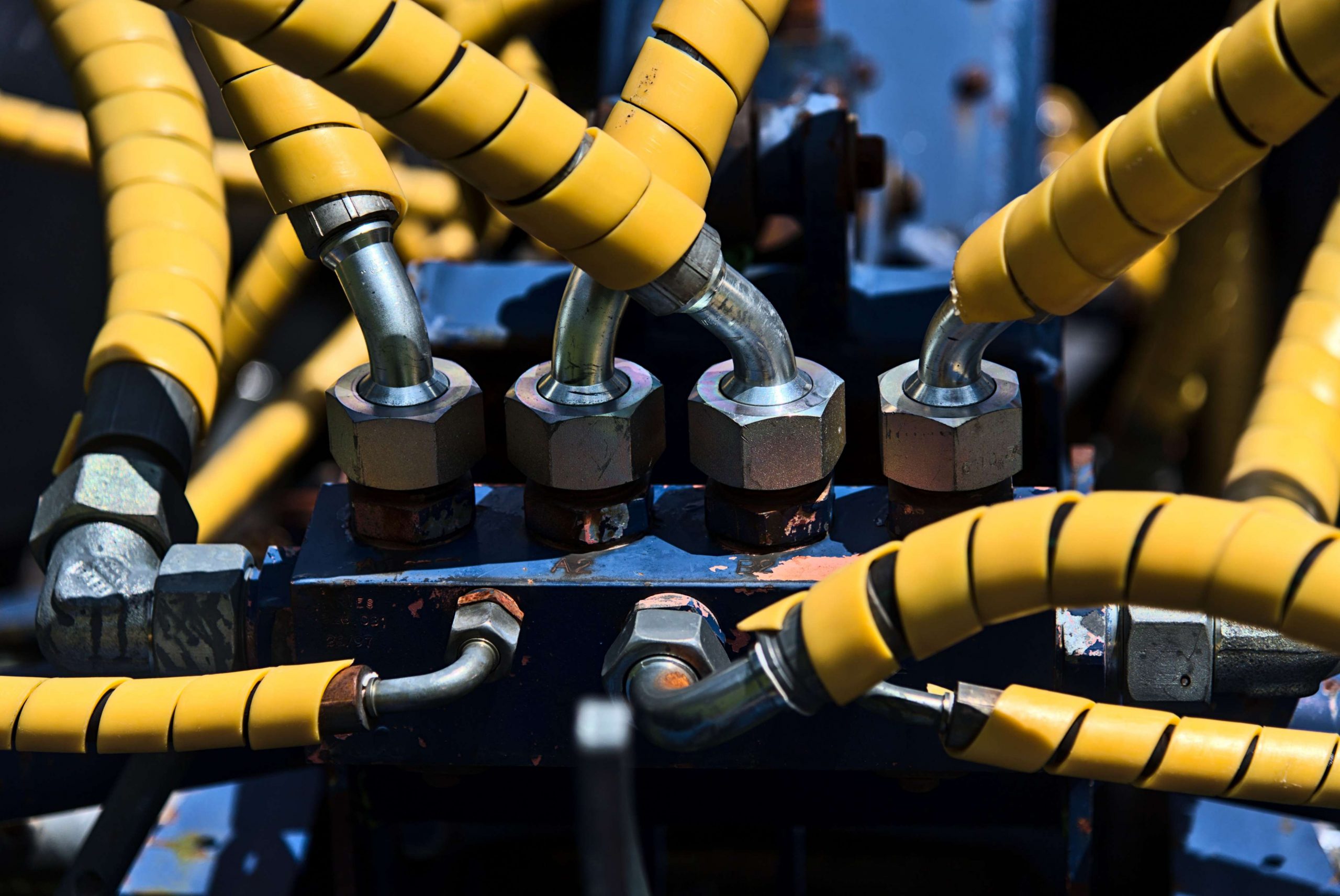
Commissioning is the point where your design assumptions meet the real-world operating conditions of the application for the first time. The system is exposed to real fluid behaviour, real contamination risk, real control dynamics, and real safety hazards. That is why the commissioning plan should be treated as an engineering validation process, not a start-up formality. ISO 4413 is the current core reference for the hazards associated with hydraulic fluid power systems and the principles needed to avoid them – and therefore forms the framework for most commissioning processes.

A disciplined commissioning sequence matters because the safety margin is often smaller than many people assume. For example, the HSE warns that fluid released from a hydraulic system can be injected through the skin, with injuries severe enough to require amputation or major surgery. Its safety bulletin adds that hydraulic injection injury has occurred at pressures above 100 bar, and may occur at pressures as low as 7 bar.
With this in mind, the following is a step-by-step implementation checklist for commissioning a new fluid power system safely.
Step 1: Freeze The Configuration Before Oil Enters The System
Before energising anything, confirm that the as-built circuit matches the approved schematic, not the last issue of the CAD pack. On a new build, this means verifying line identification, valve orientation, actuator porting, installed relief settings, motor rotation, sensor scaling, and the actual specification of every pressure-containing connection. This is also the point to verify that all your hydraulic fittings are the correct type and series for the ports, tube, hose, and pressure class in use, because commissioning is the wrong stage to discover a mixed thread form or an unapproved adapter stack. ISO 4413 requires system parts to withstand the maximum operating pressure or be protected by further measures, with pressure-limiting valves as the preferred safeguard against excess pressure.
Step 2: Set A Cleanliness Baseline Before First Start
Do not assume new oil is clean enough, and do not assume a newly assembled manifold is internally clean. Eaton’s contamination-control handbook notes that new fluid can arrive at typical cleanliness levels of 17/16/14 or dirtier, and recommends removing contamination from new fluids before they enter the system.
Practically, the checklist here is simple:
- Fill through filtration, not from open drums or transfer containers of unknown condition;
- Inspect reservoirs, lines, and manifolds for debris from fabrication and assembly;
- Install temporary commissioning filtration where the risk justifies it;
- Define the target ISO 4406 cleanliness code around the most contamination-sensitive component in the circuit (ISO 4406:1999 is the standard for classifying solid contamination in hydraulic fluid).
Step 3: Prime And Bleed The Hydraulic Gear Pump Properly
A hydraulic gear pump should not be expected to pick up oil on its own during first start. We recommend the unit be completely filled with hydraulic fluid, using the highest port for bleeding, before start-up. Then start the pump without load and depressurised for a few minutes to ensure lubrication, while monitoring noise, reservoir level, and aeration. If the pump does not displace bubble-free oil after about two minutes, the system should be checked again.
Following this sequence helps you avoid cavitation, dry-running damage, and false fault diagnosis during the first pressure build. On a new installation, unusual noise, visible bubbles in the return flow, or unstable suction pressure are often the telltale signs of commissioning failures, and should never be ignored.
Step 4: Use A Hydraulic Test Kit From Dedicated Test Points
Do not commission blind. A proper hydraulic test kit should be connected through dedicated test points so that the pressure, temperature, and fluid condition can be observed without breaking into the circuit unnecessarily. We recommend test point fittings for pressure monitoring, bleeding cylinders and hydraulic systems, and fluid sampling, with leak-free connections before the valve opens and coupling under pressure possible up to 400 bar.
This allows you to establish measured values throughout the commissioning process: suction pressure at the pump inlet, case drain behaviour where applicable, main line pressure, pilot pressure, relief cracking pressure, unloaded flow behaviour, and thermal rise under staged duty.
Step 5: Raise Pressure In Stages And Test Functions Under Control
Finally, all hydraulic functions should be tested at low pressures under controlled conditions before full start-up. Check the specified pressures (e.g. working pressure and suction pressure), then perform a leak test both without load and with load before commencing normal operation.
The correct sequence is: no-load circulation, low-pressure function check, partial-load verification, then full-load validation. At each stage, confirm the actuator direction, valve fail position, relief behaviour, deceleration characteristics, and any abnormal heat generation.
Step 6: Do Not Sign Off Until Post-start Data Is Captured
Following commissioning, most fluid power applications require a running-in phase of about 10 operating hours for external gear units, during which friction and heat generation are initially higher. After that phase, analyse a hydraulic fluid sample and change the fluid if the required cleanliness is not achieved. This final check is where many commissioning plans fall short. If the system includes accumulators, we recommend checking the precharge during the first week after commissioning, again after three months, and then at intervals of 12 months or less as appropriate.
Next Steps
If you are looking for practical advice, quality products and a supplier that understands real-world fluid power commissioning challenges, please contact Hydrastar today. Call 01353 721704 to discover the solutions available and the best next step for your project.
A smooth commissioning process can help prevent faults, delays, and safety issues later on.
Read our latest blog to find out what to check before start-up, including system setup, hydraulic fittings, hydraulic gear pump performance, and how a hydraulic test kit supports safe commissioning.
Image Source: Envato