
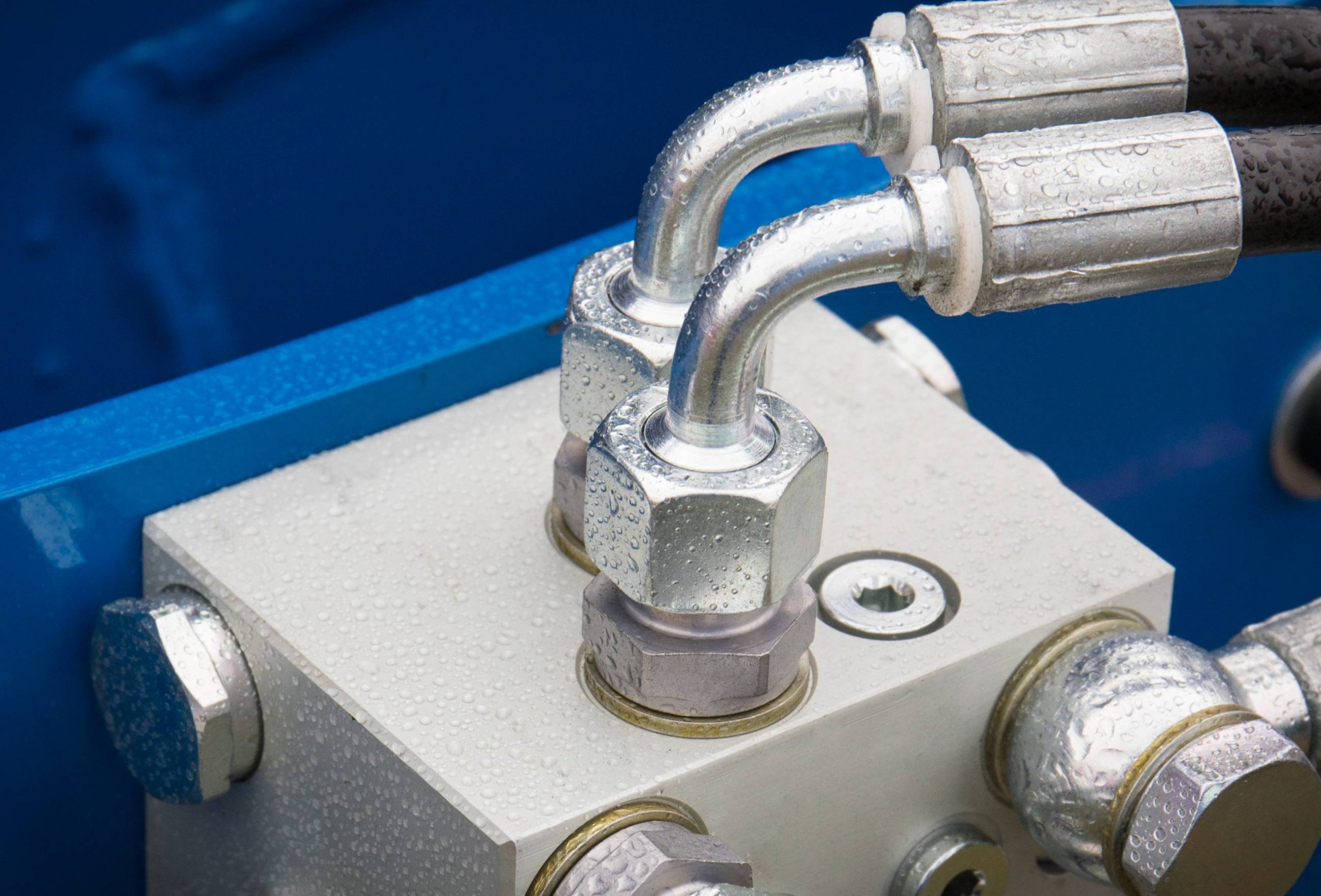
A quick release coupling fault usually gives a visible symptom of impending failure before it gives a clean diagnosis. Oil at the nose, a sleeve that will not retract, a coupling that connects cold but not hot, or a hydraulic quick coupler that needs excessive force can all point to different failure mechanisms. Generally speaking, if a hydraulic quick release coupling is leaking, sticks, or refuses to connect, there are four common culprits.

Let’s look at each in turn:
1. Residual Pressure Is Holding The Valve Closed
A hydraulic quick release coupling relies on the two halves opening each other’s internal valves as the connection is made, so if one side of the circuit remains pressurised, the poppet or ball can resist movement strongly enough to prevent full engagement. Thermal expansion can produce the same effect on parked mobile plant or attachments left in sunlight, because trapped oil has nowhere to expand.
The pattern is often intermittent, meaning the hydraulic coupling may still connect after pressure is relieved, after the circuit cools, or after a line is safely bled down. The key diagnostic check is pressure state, not thread size: confirm whether both sides of the line are depressurised before the coupling itself is condemned.
2. Seal Damage Is Creating Leakage At The Interface
External leakage at a quick release coupling often comes from a damaged dynamic seal, face seal or valve seal rather than from the threaded connection. Repeated connection cycles, pressure pulses, heat and incompatible fluid can harden, swell, cut or extrude the seal. Once the seal lip or O-ring no longer sits correctly, oil can pass even when the coupling appears fully engaged.
The failed seal should be read as evidence: Extrusion suggests pressure or clearance problems, swelling points towards fluid or chemical incompatibility, and cuts may indicate contamination, poor alignment or damage during connection.
3. Contamination Is Preventing Full Seating
Fine particles on the poppet, ball, sleeve or face can stop the valve from closing or opening fully. The coupling may then weep after disconnection, refuse to latch cleanly or feel rough through the connection stroke. This is common where caps and plugs are missing, attachments are stored outdoors, or hose ends are laid on contaminated surfaces during changeover. Your inspection should include the nose, sleeve travel, locking balls, valve face and any visible scoring.
4. Side Load Or Undersizing Is Overloading The Coupling
A hydraulic quick release coupling is part of the pressure line, but it is also a mechanical joint. Unsupported hose weight, tight routing, attachment movement or an angled hose exit can pull the connected halves out of alignment. That side load can mark the nose, wear the locking balls, distort the sleeve or make disconnection stiff under load.
Duty also affects your part selection, because if the coupling is undersized for the flow, pressure drop increases across the connection and heat is generated locally. The symptoms can sometimes resemble a valve or actuator fault, especially if machine performance falls only under high-demand operation. Before ordering a replacement, therefore, check your hose support, route movement, rated flow and pressure drop as well as the visible damage.
Match The Coupling To The Fault
Our hydraulic specialists are here to help you match the right replacement part to the fault mechanism as well as the connection size. To find out more, please click here to send us a message, or give us a call on 01353 721704.
Image Source: Envato